
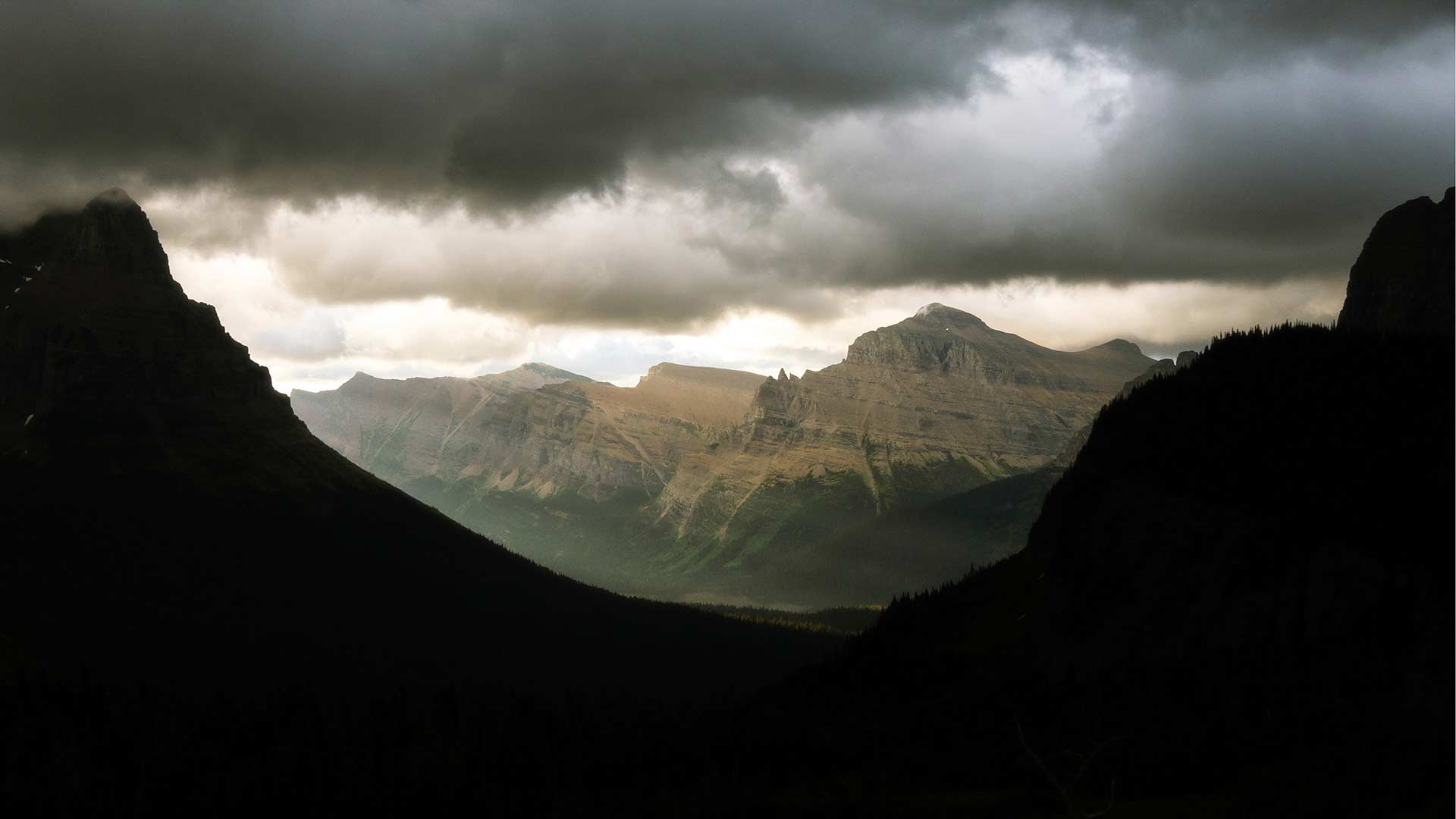
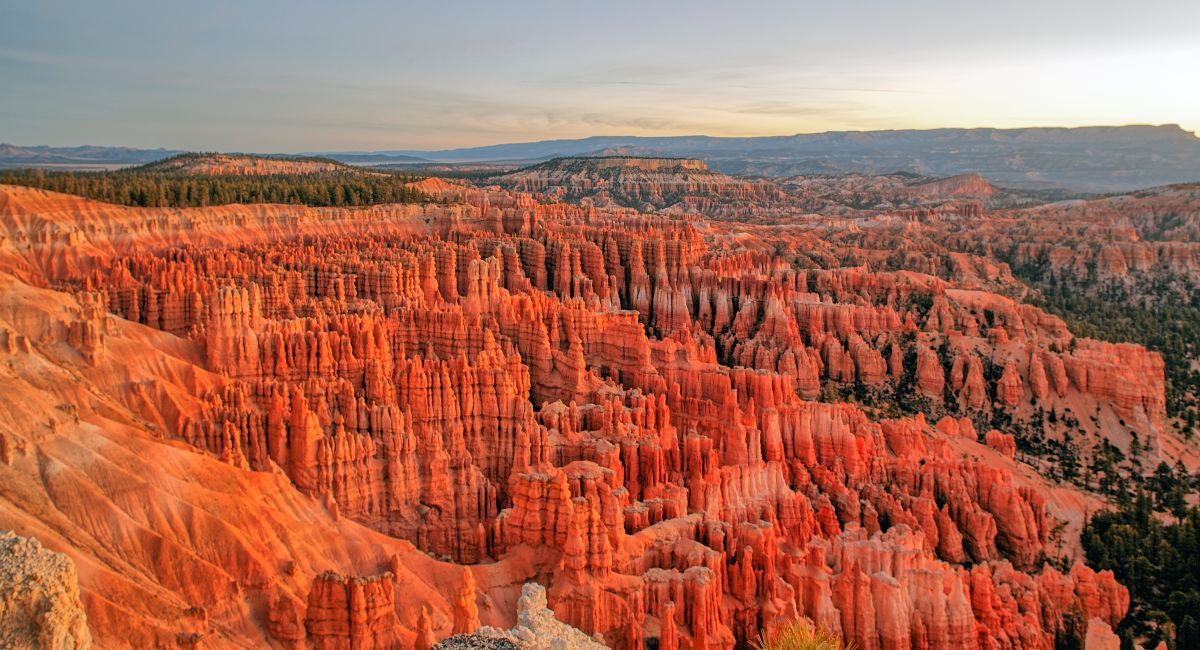
The first thing you notice at Bryce Canyon isn't the hoodoos. It's the air — thin, cold, and so clear that the stars show up before the sun fully sets. At 8,000 feet, Bryce doesn't feel like the rest of Utah. Renters who arrive expecting red desert heat find themselves pulling out blankets by 9 PM, even in July. That altitude changes everything about how you camp here, and it's the detail most guides skip.
This one doesn't.
TL;DR
- Bryce Canyon has two campgrounds: North (99 sites, year-round, $30/night) and Sunset (100 sites, April–October, $30/night)
- Neither campground has hookups — no electric, water, or sewer connections
- North is reservable 6 months ahead; Sunset only 14 days ahead
- RVs must use designated loops (North A & B, Sunset A) — tent loops won't accept vehicles over 20 feet
- Dump station at North Campground (summer only, free for registered campers)
- The park sits at 8,000–9,000 feet — nights are cold even in midsummer
- Bryce is an International Dark Sky Park with the clearest stargazing in Utah
- Entrance fee: $35/vehicle (+$100 nonresident surcharge for non-US residents in 2026)
- Ruby's Inn (0.5 mi from entrance, 250+ sites, full hookups) is the nearest private campground
- Nearest rental cities: Salt Lake City (4.5 hours) and Las Vegas (4 hours)
What makes Bryce Canyon different for RV campers?
Elevation. Every other factor flows from it.
Bryce Canyon sits between 8,000 and 9,115 feet — higher than Yellowstone's canyon, higher than Grand Canyon's South Rim. Summer highs peak in the 60s and 70s°F, not the 100°F-plus of Arches or Canyonlands. Nights drop into the 40s even in August. Without hookups, you can't run an air conditioner — but at Bryce, you won't want to. You'll want a blanket.
The park is famous for its hoodoos — thousands of narrow rock spires packed into amphitheaters along the Paunsaugunt Plateau's eastern edge. But Bryce's other distinction is its darkness. It's one of the best places in North America to see the night sky, and the National Park Service runs roughly 100 astronomy programs a year to prove it.
Entrance fee: $35 per vehicle for a 7-day pass. In 2026, Bryce Canyon is one of 11 national parks charging a $100 nonresident surcharge for international visitors (waived with an America the Beautiful Pass). The free park shuttle runs mid-April through mid-October — and vehicles over 23 feet are restricted from the Bryce Amphitheater area during shuttle season.
Which campground should you book at Bryce Canyon?
Bryce has two campgrounds, both inside the park, both $30 per night. They share the same amenities — flush toilets, potable water, no hookups — but their reservation systems are completely different, and that difference should drive your planning.
North Campground
Ninety-nine sites in ponderosa pine forest, a short walk from the Rim Trail and Sunrise Point.
- Sites: 99 (Loops A & B for RVs, Loops C & D tent-only)
- Fee: $30/night (50% off with Senior/Access Pass)
- Season: Year-round (some loops close in winter)
- Reservations: Up to 6 months in advance via Recreation.gov
- RV loops: A and B — vehicles over 20 feet welcome. Generators permitted 8 AM–8 PM
- Tent loops: C and D — no vehicles over 20 feet, no generators
- Amenities: Flush toilets, potable water, dump station (summer only, free for campers)
- Elevation: ~8,000 feet
Sunset Campground
One hundred sites west of Sunset Point, 1.5 miles south of the Visitor Center.
- Sites: 100 individual + 1 group site (up to 30 people, $55–$100/night)
- Fee: $30/night
- Season: Mid-April through mid-October
- Reservations: Only 14 days in advance via Recreation.gov
- RV loop: A only — vehicles over 20 feet welcome. Generators 8 AM–8 PM
- Tent loops: B and C — no vehicles over 20 feet, no generators
- Amenities: Flush toilets, potable water. No dump station (use North Campground's)
- ADA sites: 2 (sites 223 and 224, request during reservation)
- Elevation: ~8,000 feet
The reservation window trick
The two-reservation-window system trips up more campers than any other planning detail at Bryce. North Campground books 6 months ahead and fills almost instantly for peak weekends. Sunset books only 14 days ahead — which sounds worse, but we actually see higher success rates with Sunset bookings because fewer people know about it. The 14-day window is a feature, not a bug.
What neither campground has
No hookups of any kind. No showers on-site — coin-operated showers and laundry are available at the General Store near North Campground (seasonal). Maximum 6 people and 2 vehicles per site. Hammocks and slacklines prohibited (nothing suspended from trees). 14-day stay limit in summer.
Where can you get hookups near Bryce Canyon?
Ruby's Inn Campground
Ruby's Inn is to Bryce Canyon what a base camp is to a mountain — the place everybody uses whether they planned to or not. It sits 0.5 miles from the park entrance with over 250 sites in the pines, full hookups (electric, water, sewer), pull-through sites for large rigs, hot showers, a heated pool, laundromat, general store, and free WiFi. The park shuttle stops at the campground entrance during peak season.
Half our renters who camp inside the park for three nights spend at least one night at Ruby's for the hot shower, the laundry, and the WiFi. No shame in it.
Other private options
- Bryce Canyon RV Resort (Rjourney) — Full hookups from $45/night. Located in Cannonville, about 20 minutes from the park. Pool, playground, dump station, propane.
- Bryce Canyon Pines — Highway 12, full hookups, attached restaurant, general store.
- Red Canyon Campground (USFS) — $15/night, no hookups, 10 miles from Bryce on Highway 12. A scenic alternative in the red rock formations of Dixie National Forest.
What can you see from Bryce Canyon's scenic drive?
The main park road runs 18 miles from the entrance to Rainbow Point at 9,115 feet — the highest point in the park. It's fully paved, two lanes, and RV-accessible at every stop. Thirteen viewpoints line the route, all with paved pulloffs.
The NPS recommends driving south to Rainbow Point first, then stopping at viewpoints on your way back north. Budget 2–3 hours for the full drive with short walks.
Key stops (south to north on the return):
- Rainbow Point (Mile 18) — Highest viewpoint. Views south to the Grand Staircase and Navajo Mountain. Bristlecone pine loop trail.
- Yovimpa Point (Mile 18) — Adjacent to Rainbow Point. South-facing panorama across five geologic layers.
- Agua Canyon (Mile 14) — Two prominent hoodoos framing the canyon.
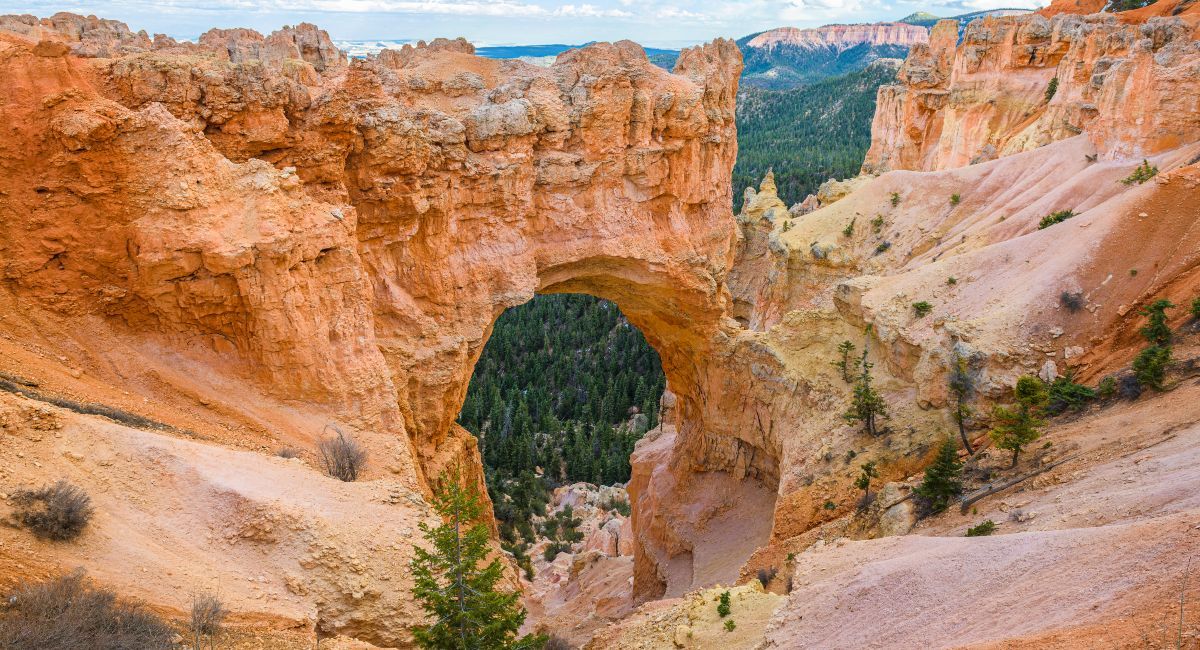
- Natural Bridge (Mile 13) — A 125-foot arch (technically not a bridge) visible from the road.
- Bryce Point (Mile 5.5) — Best panoramic view of the full amphitheater.
- Inspiration Point (Mile 5) — Three-tiered viewpoint overlooking the densest hoodoo formations.
- Sunset Point (Mile 4) — Gateway to the Navajo Loop Trail, the park's most popular hike. Thor's Hammer visible below.
- Sunrise Point (Mile 3) — East-facing overlook, best morning light on the hoodoos.
One shuttle-season note: during mid-April through mid-October, vehicles over 23 feet are restricted from the Bryce Amphitheater area (the first few stops). Use the free shuttle for those viewpoints and drive your RV on the southern section of the road, where there are no restrictions.
Why is Bryce Canyon the best park for stargazing?
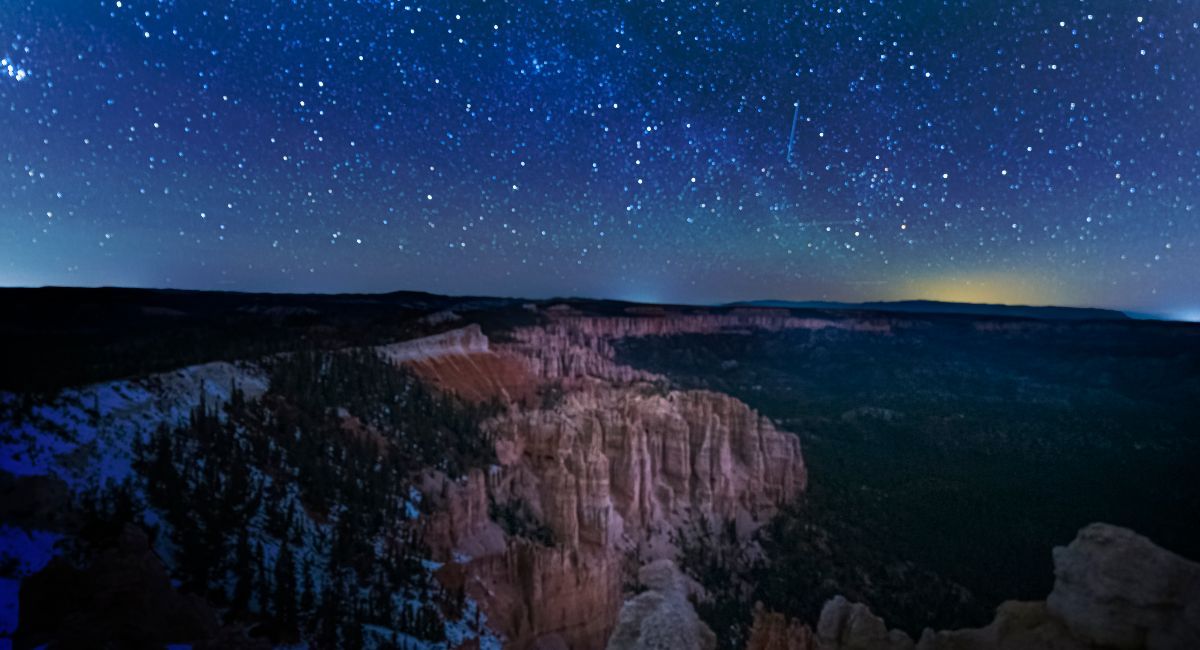
Bryce Canyon is an International Dark Sky Park — and at 8,000+ feet with minimal light pollution, it's arguably the best place in the national park system to look up.
On a moonless night, you can see over 7,500 stars from the rim — compared to roughly 2,500 in a typical city. The Milky Way stretches horizon to horizon, and on the best nights you can see it casting shadows on the hoodoos below. The park's amphitheater shape creates natural viewing bowls that block ambient light from the surrounding plateau.
The NPS offers roughly 100 astronomy programs annually, including ranger-led talks, telescope viewing (provided by the Salt Lake Astronomical Society), and full-moon hikes along the rim. The annual Bryce Canyon Astronomy Festival — a 4-day summer event — draws volunteer astronomers from across the region with telescopes for public viewing. All programs are free with park entry.
In our booking data, Bryce Canyon is the park where renters most often mention stargazing in their trip reviews. That tracks — you don't need a telescope, you don't need special conditions, you just need to look up from your campsite. The hoodoos make natural amphitheaters for the sky, and the park's elevation keeps you above most of the atmospheric haze.
Best stargazing strategy for RV campers: camp inside the park (either campground) so you don't need to drive after dark. New moon weekends offer the darkest skies — check a lunar calendar before booking.
When should you visit Bryce Canyon in an RV?
Spring (April–May)
Sunset Campground opens mid-April. Highs range from 40°F in early April to 60°F by late May. Snow is still possible through April at this elevation. Roads stay open but upper viewpoints may close temporarily after storms. Book North Campground 6 months out for spring weekends.
Summer (June–August)
The most comfortable season — highs in the 60s and 70s°F, the rarest thing in Utah RV camping. Nights still drop into the 40s, so bring layers. This is peak season: both campgrounds fill daily, the shuttle runs, and astronomy programs are in full swing. The Astronomy Festival happens in summer — check the NPS calendar for exact dates.
Fall (September–October)
Aspens on the plateau turn gold against red rock — one of the best color shows in the Southwest. Crowds thin, temperatures drop into the 50s and 60s°F during the day. Sunset Campground closes mid-October. North stays open year-round.
Winter (November–March)
Snow on hoodoos is one of the most photographed scenes in the park system. North Campground operates year-round, though some loops close in heavy snow. Highs hover between 20°F and 40°F; nighttime lows can reach 0°F. You'll need a rig with solid insulation and a reliable propane furnace. Bring your winter RV camping gear — frozen water lines are the #1 issue at this elevation.
Where should you rent an RV for Bryce Canyon?
Salt Lake City is 4.5 hours north via I-15 and Highway 89. It's the largest RV rental market in Utah and the natural starting point if you're combining Bryce with other Utah parks on a longer loop.
Las Vegas is 4 hours southwest via I-15. This works well if you're pairing Bryce with Zion (80 miles south of Bryce) — and if you're doing both, the RV parks near Zion are worth researching for the hookup options Bryce lacks.
Size matters here but differently than you'd expect. There's no posted maximum RV length for the RV loops at North or Sunset — but individual site driveways vary, and Recreation.gov lists the driveway length for each site. Check before you book. The practical sweet spot is a Class C or small Class A under 30 feet. Campervans and Class Bs fit everywhere. If you're not sure how to evaluate your rig's power needs for a park without hookups, sort that out before you get to 8,000 feet with no generator fuel in sight.
About this guide
This guide draws on data from the National Park Service's Bryce Canyon campgrounds page, Recreation.gov's North Campground listing, the NPS astronomy programs page, and the NPS Southern Scenic Drive guide. Campground specs and fees reflect current NPS published information. The 2026 entrance fee and nonresident surcharge were confirmed through Park Adventurer's fee database. Experiential details come from Outdoorsy's rental and booking data, including trip reviews and campground success-rate patterns.